|
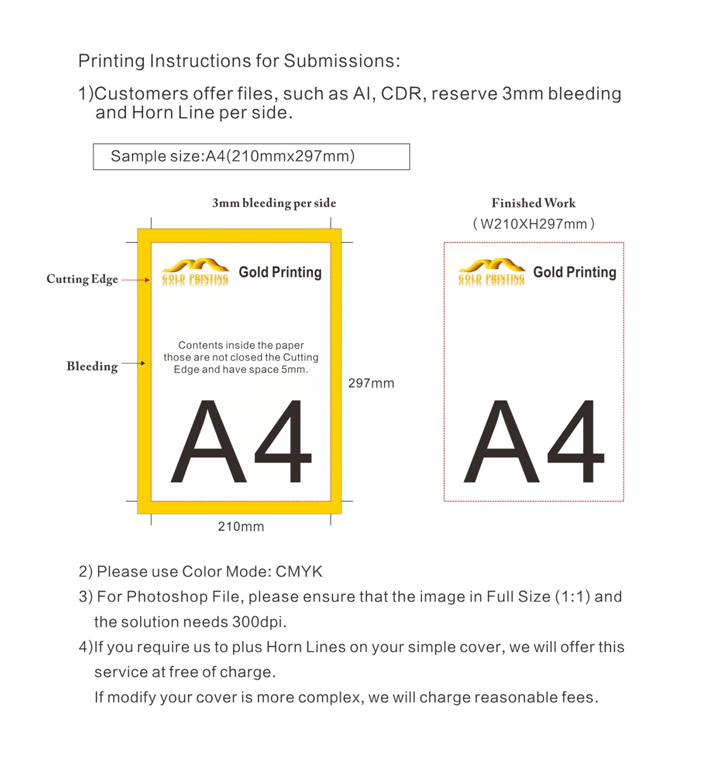
COLOR MANAGEMENT OF OUTPUT: CMYK:
U.S wed coated(SWOP)v2
Japan Color 2001 Coated
How to Import from China? You may be able to find a new business opportunity or profit growth by directly importing products from China. It can be complicated, but it can pay off in both immediate profit and long-term success. The process is becoming easier and easier thanks to the trend of globalization and advances in international trade technology.
Steps
• Find the products you’re interested in. There are many sources to find your products. The internet is the easiest one to start with. There are many web listing services. Here, you can register your username, post the products of your interest, and you will receive tons of products• supply information and perhaps a price list.
• Establish a relationship with potential suppliers. Select a few potential suppliers to communicate with. Narrow down the ones that you really want to work with. Discuss the price and trade relationship. Obtain product samples. Discuss shipping and payment terms. Gather all necessary information to prepare for placing a trial order.
• Understand trade terms and use them. Before placing any order, you need to understand and confirm with your suppliers about shipment terms. Most popular are FOB and CIF, as well as payment terms. These are closely related to your landing cost calculation and risk assessment. You can consult an import management company and a freight forwarder for detail break-down on the costs and risks. You can also use an import management company to negotiate the trade terms.
• Do your homework on compliance issues. You need to understand the relevant import compliance regulations beforehand. Besides US Customs and Border Protection, other government authorities like USDA, FDA, DOT, and ATF also regulate the importation. Pay particular attention when you import textile products from China. Go to the websites of these agencies to understand, register or download the forms. Compliance issues can be very complicated for some products. It is highly recommended to consult a good Customs House Broker before placing any order.
• Select a forwarder and Customs House broker. Go to your local international trade organization/association and Customs office to find the list. Visit them, and select the one you like. For the first time importer, use more individualized services, because you need more attention than you would expect.
• Place a trial order with a written Purchase Order if everything goes well. In the purchase order, besides typing out a detailed description of the products and trade terms, list all needed shipping documents.
• Transportation and Customs clearance. Your forwarder and Customs broker should take care of your transportation and Customs clearance. However, you also need to track the process and assistance, such as providing additional products information and endorsing bill of landing. You need to issue a power of attorney to your broker and purchase Customs bond for your importation.
• Receive the products and keep the records. Now you can go to your next step to sell your products and make profit. Now you are on the track.
Tips
• Pay attention to the kind of business of your supplier; are they manufacturers, or 3rd party suppliers? Compare the advantage and disadvantage. Manufacturers may have a faster response in the process of product development, while 3rd-party suppliers have broader channels that can satisfy your other needs in the future. Working with 4th-party suppliers is not recommended.
• Establishing healthy personal relationship with the key employees of your supplier is very important when doing business with Chinese people. Learn the term "guanxi" (gwan-shee), which loosely means "relationship", and keep in mind that saving face is very important for Chinese people.
• You need to have a realistic consideration of the landing cost. There may be many hidden costs. The best way is to consult an import management company.
• A Letter of Credit is commonly used in trade with China. Go to your bank to get detail formality and cost.
• Export agents in China are very commonly hired by China exporters. Some of these export agents are also 3rd-party suppliers, others just provide export services.
• Neglecting compliance can be very costly. Not only might you need to pay unexpected and very high Customs duty such as anti-dumping duty, but also you may risk delaying the Customs clearance and paying the expensive storage fee at the railway station or container yard.
• If solid wood packaging material is used, talk to your broker. Sometimes pallet packing is necessary to reduce the transportation cost during the process of loading and unloading. Talk to your forwarder for detail.
How to Find a Supplier in China? Suppose you come up with a product idea or think you have market channels for certain products, and you want to find a supplier in China because of the low product development cost and low production cost there. If you Google the product name or concept, you will find tons of China suppliers/manufacturers. However, you still think you have not got one, because you want to find a capable and reliable one that would satisfy your specific needs and have a strong desire to do business with you. Many people get frustrated because they have been communicating with suppliers in China for months, but fail to move forward. The reason, most likely, is that they did not find the suitable one at the beginning. To successfully find a suitable China supplier, you need a strategy. This strategy will consist of awareness, knowledge and a good amount of homework. Below are some practical steps to find a suitable Chinese supplier for you.
Steps
• Understand what you need. You need to first know what is available and have a way to categorize the information. Here are some categories to help you think about Chinese suppliers: manufacturer vs. 3rd-party supplier; Big corporation vs. small family-owned; 3rd-party supplier with in-house product development capability vs. 3rd-party supplier that just buys-in and sells-out; vertically integrated manufacturer vs. assembly-based manufacturer; etc. Properly categorizing the suppliers will help you understand what you need. For example, if you need to import products in a narrow range, you may choose a manufacturer other than a 3rd-party supplier. If you are a small business and need dedicated attention, you may want to develop a good relationship with a small family-owned business.
• Do some preliminary internet research to further develop your category system towards your specific needs.
• Create a data table to help you record the search result, so the job can be done more efficiently and effectively. The table should include columns like company name, contact information, business scale and scope, category check boxes (important), and notes.
• Use search engines to search information related to your product name. The first 100 results would be the most relevant websites related to the product of your concern. You can also find your competitors• information and develop a better sense of market segment and marketing channels. Besides Google, you may also want to try several other major engines like Yahoo, MSN and AltaVista .
• Use popular business directory websites to obtain very structured information for Chinese suppliers. Alibaba and Made In China could be the best for finding many Chinese suppliers, their company information, pictures of products and contact information. The directory websites are also excellent resource to obtain industrial knowledge.
• Narrow down the the list of suppliers you want to work with to a manageable amount. At this stage, you may already know what your real needs are and what is available.
• Initiate contact with the suppliers you want to work with, and further develop relationships with them. Eventually, you will find the one. The process can be fun and a friendly experience.
Tips
• Analyzing the types of suppliers has strategic importance. It will help you to understand where you are, what kind of results to expect, and what are the things you need to take care of in the mutual cooperation. You may want to have an experienced person help you to analyze the information. In your strategy, you will also need to include the consideration of the future contracting and operation. You may seek advice from Chinese professionals who understand the Chinese mentality, culture and business practices. You may get the incorrect interpretation if you visit the supplier English website, or you could omit data that contains key information.
• Just because a site is ranked higher in Google search listing, this does not necessarily mean it is a more serious business. Some very good Chinese suppliers are not well-versed in having their website listed highly, while some other internet guys can have their website listed very highly. Use your industrial judegment.
• Information comes from seemly insignificant data, for example, the email addresses of xyzname@companydomain.com.cn, xyzdkt@online.public.zj.hz.com and ykdfupp23432@hotmail.com may reveal useful information about Chinese suppliers. However, do not judge an address too quickly. You never know where good information can come from.
• Be aware that while the decision-maker may not speak any English, establishing good relationship (guanxi) with the top management is crucial for long-term success.
• Email is good for exchanging product specifications, catalogue and price list. To establish a deeper relationship, a phone call is 10 times better than email. A personal meeting is 100 times better than a phone call. Many people want to start a business, so you have to show you are more serious. As long as your contact person uses English, you can just go ahead and give that person a phone call. It does not matter how much you and that person can understand each other; you can always follow up with an email.
• Work with suppliers that have already exported their products to Europe or the US. Pay attention to the agent relationship. Many manufacturers may have their products exported to the US in good quantity through a third party supplier without an exclusive supply agreement. They may want to have direct channels to the US, and that might mean more business for you.
Warnings
• If you send out inquiries through Alibaba or Made In China , you will get tons of replies from suppliers of all kinds. Some guys may continously send you product info for years, and are able to pass through all sorts spam protection. You may not want to use your primary email account to register with these sites.
About Hardcover Books Printing Service
Hardcover Book, cost relatively high, and the prices are always higher than the paper-back binding book. Usually used for the book demanding of: consisting of more pages, frequently read, keep and storage in a long time, demand more beautiful and more important. Meanwhile, its front cover and back cover also require the material of hard quality or semi-hard quality. From the appearance, the hard-cover form can
divide into the round back, square back and soft.
Hard-cover with round back:
Hard-over with round book, is the way that the hard-cover book's back bind in the shape of round or arch round.
This kind of binding way, can help the book cross over and convenient to browse, increase the firm degree of
the core books.
Hardcover with square back:
Square back hard-cover also called flat hard-cover, similar to the round back hard-cover, but a little different in the back: it's flat not round. In the case of changing the paper-back into hard-cover one or when the pages are all separated, only can become the flat one no line. Such books are usually used in library for storing a long time.
Soft hard-cover:
Soft hard -cover, is the way for lighter of books weight and convenient to browse, change hard one into soft one, namely replace the thicker cardboard on the general hardback with thinner cardboard. It is generally thicker with the books that are often browsed, for example various kinds of reference books, multi-purpose note book.
Hard-cover, always designed for classical work, academic work, important historical data, album, picture collection, reference book, etc.
Most hard-cover use the hard cover book shells(boxes), some still add the book jacket, all have a better protection the book in the core.
Due to the hard-cover book is carefully-selected in material and the craft is complicated, the cost is higher than the paper-back binding book. The hard-cover book has already belonged to the top works of the books, to some books, in order to improve its reserve value, even adopt and put luxuriously, not only bind design beautifully, it is superior to chose the materials. But this is highest grade in the books after all and a little rare.
Recently, binding form is developed from traditional line into paper-back binding hard-cover, including books' format, the script, fonts, covers, lining papers, title page, layout, insert and the illustration that the big change on the book stated before. For example, the format of the books is becoming more regular; the design of the front cover is more colorful,the form of the layout is more various, the format add more both pictures with texts, The use of the punctuation mark is becoming riper, the font is influenced by the west too, develop in the direction of beautifying.
In a word, books and periodicals in binding field have achieved great improvement, demonstrate a scene of vitality in printing.
|